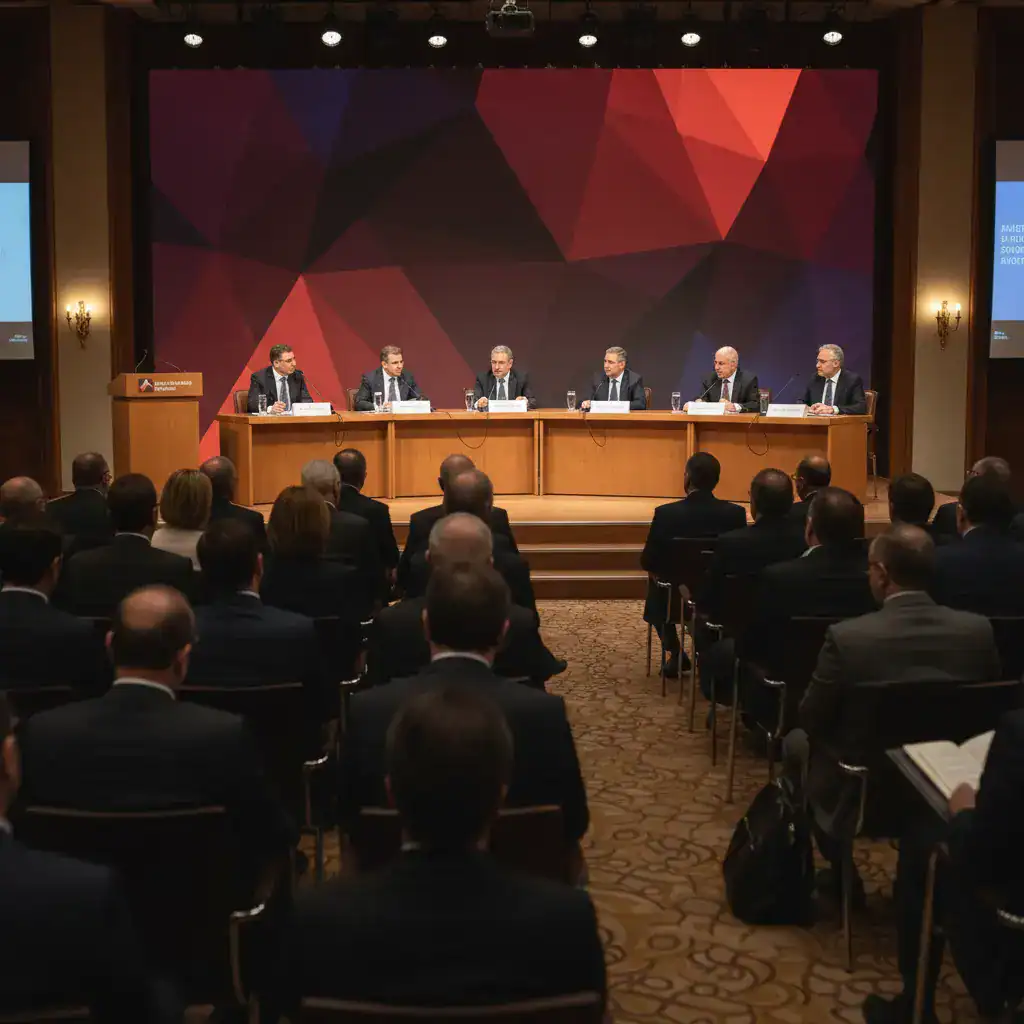
Athens Defence Conference: European Defence Funding and Private Capital
Athens, June 29, 2026 – The Athens Defence Conference, organized by the Delphi Economic Forum in collaboration with the Hellenic Foundation for European and Foreign Policy (ELIAMEP), addressed the critical need for new funding mechanisms to support the European defence industry and remove obstacles that continue to limit the participation of private capital in the sector.
A common theme among speakers was that increased geopolitical challenges and significant investment needs facing Europe necessitate the mobilization of both public and private resources to strengthen its defence autonomy and the competitiveness of the European defence industry.
Europe Enters a New Era of Security and Deterrence
Emmanuel Dupuy, President of the Institut Prospective et Sécurité en Europe (IPSE), argued that Europe is entering a new period where security and deterrence are becoming central to political priorities. He stated that better coordination between national needs and European strategic choices is required, as well as the development of new financing mechanisms for the defence industry, utilizing both markets and private savings.
George Zavvos, Chairman of the Board of Directors of the Hellenic Development Bank, pointed out that the funding gap for European defence amounts to hundreds of billions of euros, making the creation of new financial institutions and tools necessary. He also estimated that Greece has the potential to develop into a regional hub for a strong defence ecosystem.
Obstacles to Investment in the Defence Sector
Theodoros Tzouros, Head of Corporate & Investment Banking at Piraeus Bank, referred to the obstacles still faced by investments in the defence sector. He noted that ambiguities persist regarding ESG criteria, the European Taxonomy, and the classification of dual-use technologies, which hinders businesses’ access to financing.
Nigel Jones, partner at TWJ Capital LLC, argued that Europe still lags behind the United States in attracting private investment capital for defence, as it has a smaller private equity market and a limited number of start-ups in the sector. He estimated, however, that the interest of international investors in the European defence industry is gradually increasing, creating new financing prospects.
Professor Emmanouil Karagiannis of International Security at King’s College London and the University of Macedonia stressed that a key priority for Europe should be to strengthen its real defence capabilities and not to further expand bureaucracy. He also underlined the importance of maintaining relations of trust and cooperation between Europe and the United States in the field of security.
Ensuring a Stable Institutional Framework for Defence
During the discussion, it was emphasized that strengthening the European defence industry requires a stable institutional framework, clear rules for financing investments, and greater participation of private capital to meet the increased needs created by the new geopolitical environment.
The conference underscored the growing geopolitical challenges and the substantial investment requirements facing Europe. Experts highlighted that the current landscape demands a concerted effort to leverage both public and private funds. This collaborative approach is seen as essential for enhancing Europe’s strategic autonomy and boosting the competitive edge of its defence sector on a global scale.
Discussions also revolved around the need for a unified European approach to defence spending and procurement. Participants stressed that fragmentation in national defence policies and procurement processes can undermine the efficiency and effectiveness of European defence efforts. Therefore, greater harmonization and cooperation among member states are deemed crucial for optimizing resource allocation and achieving economies of scale.
Furthermore, the role of innovation and technological advancement was a prominent theme. Speakers emphasized that investing in cutting-edge research and development is vital for maintaining a technological edge in defence. This includes fostering a vibrant ecosystem of defence start-ups and SMEs, which can contribute to disruptive innovations and enhance Europe’s overall defence capabilities.
The conference concluded with a call for policymakers to address the existing regulatory hurdles and create a more conducive environment for private sector involvement. This includes clarifying ESG guidelines, streamlining the application of the EU Taxonomy, and providing clearer definitions for dual-use technologies. By doing so, Europe can unlock significant private capital flows, which are indispensable for meeting its ambitious defence objectives in the coming years.